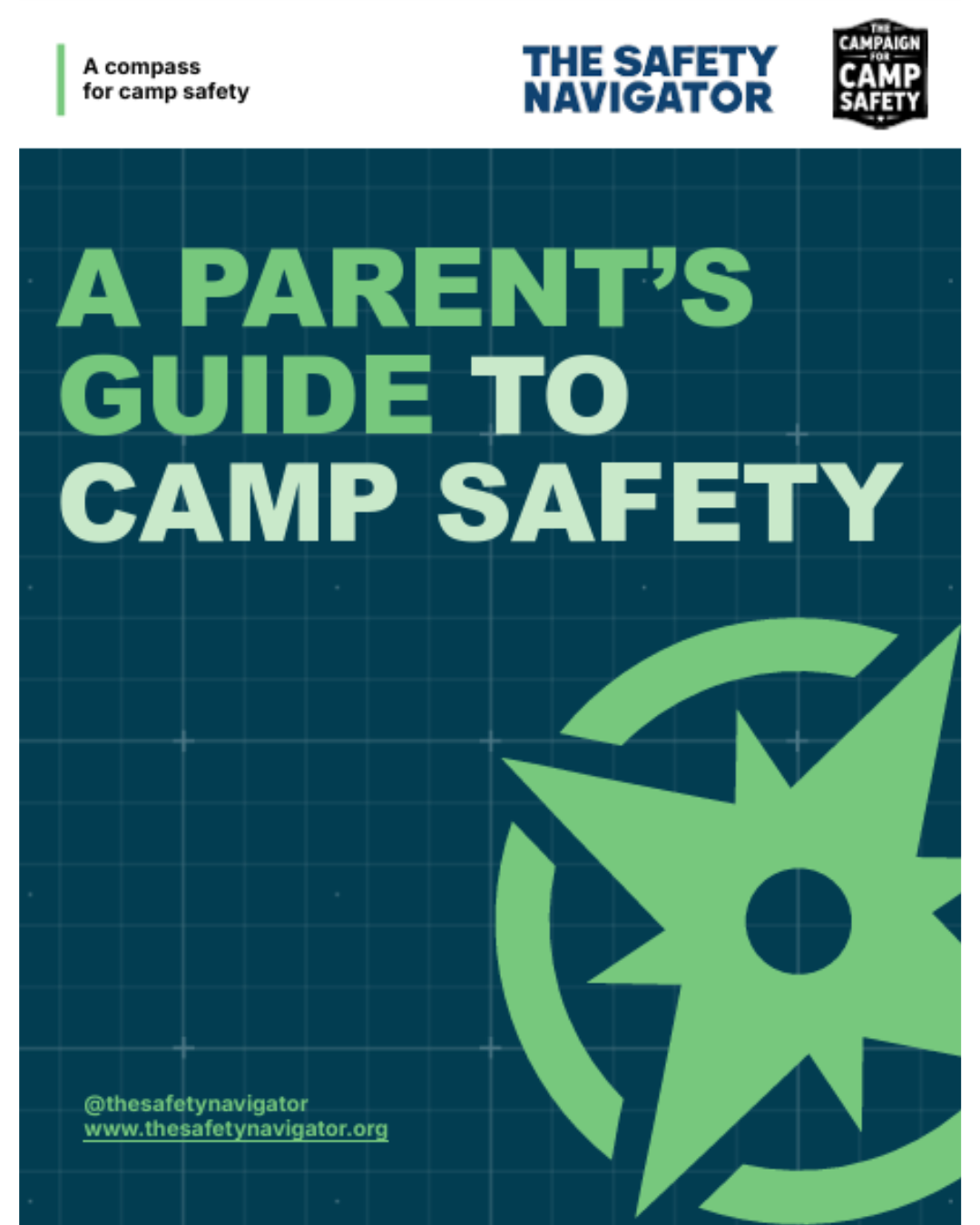
Know Before You Go:
A Parent's Guide to Camp Safety
Navigating camp safety can be difficult due to varying state standards and best practices. The Know Before You Go: A Parent’s Guide to Camp Safety addresses the challenges of navigating camp safety by offering families precise questions and clear criteria for evaluating safety protocols. This approach not only empowers parents but also provides camp directors a platform to highlight their rigorous standards and ongoing commitment to safety.
“Every child deserves a summer that is both fun and safe. Know Before You Go: A Parent’s Guide to Camp Safety advances this goal by providing families with the critical questions needed to assess camp safety standards. This initiative bridges the gap between recent camp safety legislation, the enduring legacy of Heaven’s 27, and practical, everyday safety efforts."
-Blake Bonner, Co-Founder of The Campaign for Camp Safety.
About the Guide
On July 4, 2025, two counselors and 25 campers, now known collectively as the “Heaven’s 27,” lost their lives in the devastating flash floods at Camp Mystic. This preventable tragedy is an unimaginable heartbreak that no one should have to endure. Yet amidst their deepest grief, a coalition of “Heaven’s 27” parents ignited a movement to make summer camps safer for all children. This free parent guide resource is a part of the girls’ lasting legacies.
What’s in the Guide?
Designed as a practical resource, the guide offers a starting point for safety discussions with camp leaders across nine key areas:
-
How the camp prioritizes safety in its leadership, values, and day-to-day environment.
-
How staff are prepared before and during camp to manage safety, risks, and camper wellbeing.
-
The policies and behaviors in place to protect campers from physical, emotional, and sexual harm, including how concerns are reported and handled.
-
How water-based activities are supervised and managed to keep campers safe in and around water.
-
How the camp keeps families informed, communicates during incidents, and responds to parent questions or concerns.
-
How the camp selects, vets, and hires staff and/or volunteers to ensure they are suitable to work with children.
-
How campers are actively supervised and how many staff are responsible for each group of children.
-
How the camp plans for, practices, and responds to emergencies or unexpected situations.
-
How the camp identifies risks and continuously improves its safety practices over time.
In partnership with:
Sign up for our newsletter
Stay up to date on our progress and discover how you can help create safer summer camps in your state.